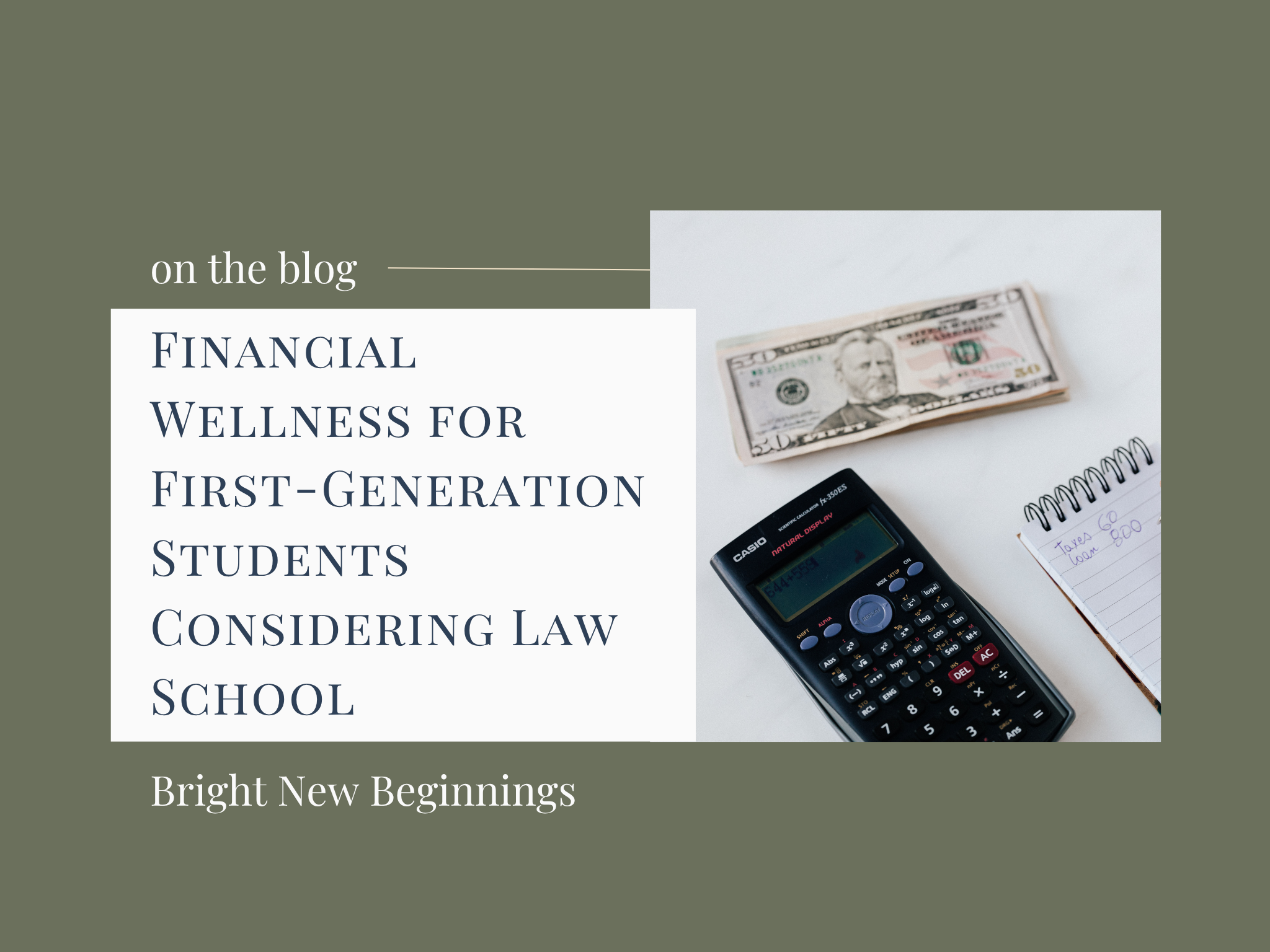
Embarking on a journey to law school can be both exciting and daunting, especially for first-generation college students. One crucial aspect that often gets overlooked is financial wellness and planning. This blog post is the first in a series focusing on financial wellness and financial planning for aspiring law students. This blog, like everything else on this website, is for informational purposes only. (Since I’m not a financial planner and not your lawyer, nothing here should be construed as financial or legal advice.)
Now that the disclaimer is out of the way, why the focus on financial health?
I didn’t grow up learning about how to manage money. In fact, I grew in a household where there wasn’t much of it. So it makes sense that I didn’t have the skills to manage it well once I started earning money on my own. I’ve made a lot of mistakes when it comes to spending, saving, and investing and it took me a while to learn how to get better at it.
If you want to go to law school and you come from a low-income background where you didn’t learn about making and handling responsibly, like I did, then you need to take financial literacy and planning seriously.
Law school is a heavy investment and can cost a lot. USC Gould School of Law, for example, estimates the cost of attendance to be around $100,000 for the 2024-25 school year, which means that a legal education can cost about $300,000 for three years. While not all law schools are this expensive, they all cost money. To pay for law school, you can save up money before attending, have family pay for your legal education, take out loans, work through law school to pay for it (there are evening programs, for example), or earn grants and scholarships.
If you’re taking out loans to pay for law school, I encourage you to do your research on loans, take control of your money and budget, and apply for all the scholarships you can before and during law school.
Here are some resources and tips to help you plan for law school and a career in law so you can keep more money in the bank and be in a good position to keep the money you earn once you graduate.
Take Control of Your Finances Early
If you aren’t sure where to start when it comes to learning how to create a budget, understand interest rates on credit cards and loans, how to invest in a brokerage account, or how your firm’s retirement plans work, here are a few books to read (or listen to if you’re into audiobooks)! As a cost saving measure, be sure to check out your public library for any book suggestions! If you use the links in this blog to purchase a book from Amazon, as an Amazon Associate, I earn commission from qualifying purchases at no additional cost to you.
- I Will Teach You To Be Rich by Ramit Sethi: This book provides practical checklists to help you reduce consumer debt, create and stick to a budget without getting overwhelmed by it, learn about investing, and more. It’s a simple yet useful read for anyone starting their financial journey.
- Clever Girl Finance | Personal Finance Platform For Women by Bola Sokunbi: Bola Sokunbi is one of my favorite financial wellness influencers! She has a positive attitude, explains money matters beautifully and in an accessible way, and her resources are invaluable for building a solid financial foundation. Bola has authored several books about personal finance and I’ve read the first. Here’s the list:
Understanding Student Loans
I took out a very, very small and manageable amount of student loans for college. It was straightforward, or so I thought: I had one loan servicer, a fixed interest rate, and a minimum amount I had to pay every month. It took YEARS for me to realize that paying the minimum monthly payment was not going to pay off the loan in a reasonable amount of time; instead, I was going to have to keep paying for decades. The truth was that my loan payment amount did not outpace the interest rate. The sad part is that I learned this hard lesson after I went to law school and was trying to avail myself of an investment opportunity. I learned that not only my undergraduate loans but also my law school loans were going to be an impediment to taking advantage of side hustle opportunities. I wish I understood how student loans work and the burden that would ensue once I took out over $100,000 in student loans to finance my legal education. After I graduated, and once I was saddled with over $130,000 in student loan debt, I came across a book I wish I would have read before I went to law school by Adam Minsky. I describe it below. There are now a few other handy resources available on the US Department of Education’s website which I hope will continue to live online during the current federal administration.
- The Student Loan Handbook for Law Students and Attorneys by Adam Minsky: This book is an essential read if you take out loans for law school. It covers how to manage student loan debt and explains various loan repayment programs based on your employment sector, including big law, mid-size firms, small firms, legal non-profits, and government roles. Reading this before taking out loans can save you from future financial stress.
- Use a Student Loan Repayment Calculator: Tools like the one on StudentAid.gov, a federal government website, can help you understand your repayment schedule, including the duration and monthly payments. If you’re not planning to enter big law, explore Income-Based Repayment plans to see how they affect your repayment timeline and monthly obligations. Research these options thoroughly to avoid surprises post-graduation.
Stay Updated on Student Loan News
Since 2020, federal student loans have often been in the news. In 2024, a court injunction paused the SAVE repayment plan, and impacted two other repayment plans as well. The Public Service Loan Forgiveness Program (PSLF) was in the news initially for having an abysmal approval rating. When the first wave of public servants became eligible for forgiveness, they were met with denials. There were issues with the payment plans they had been on, or the type of employer they worked for. Even people who worked for the federal government were denied relief under PSLF. The Obama and then Biden administrations did a lot of work to rectify the issues that PSLF was plagued with but the issues remain and are likely not going to benefit borrowers under the current Trump administration. So follow reliable sources and, when in doubt, reach out to your law school’s financial aid office for support.
- Follow Adam Minsky: Adam Minsky provides updates on changes in student loan laws via social media and Forbes. Staying informed will help you navigate the complexities of student loan programs and adjustments that may affect you.
- Public Service Loan Forgiveness Program (PSLF): If you are public interest-oriented, research the PSLF program. It forgives your student loans after you’ve worked for a qualifying employer and made 120 qualifying payments. However, due to high rejection rates and legal challenges, ensure your employment and payments meet the program’s requirements. Be sure to do your research and follow the rules carefully.
Additional Resources
- Equal Justice Works: This organization offers resources for managing student debt, particularly useful for those pursuing public interest law. Visit their website at Equal Justice Works for more information.
Financial wellness and planning are critical components of your journey to law school. By taking control of your finances early, understanding student loans, and using available resources, you can alleviate some of the financial stress associated with law school. Stay tuned for the next posts in this series, where we’ll explore more aspects of financial health.
For more detailed strategies and resources, subscribe to my blog at Bright New Beginnings. Let’s make your law school dreams a reality with sound financial planning.
If you want to take a deeper dive into learning about financial planning for law school, check out my workbook: 💼 Financial Planning for Aspiring and New Lawyers!
Whether you’re a pre-law student or a new attorney, this workbook is your ultimate resource for:
✔️ Budgeting for law school expenses
✔️ Managing student loans
✔️ Aligning financial goals with career aspirations
This workbook is available for purchase at https://stan.store/AnaJD.




Leave a Reply