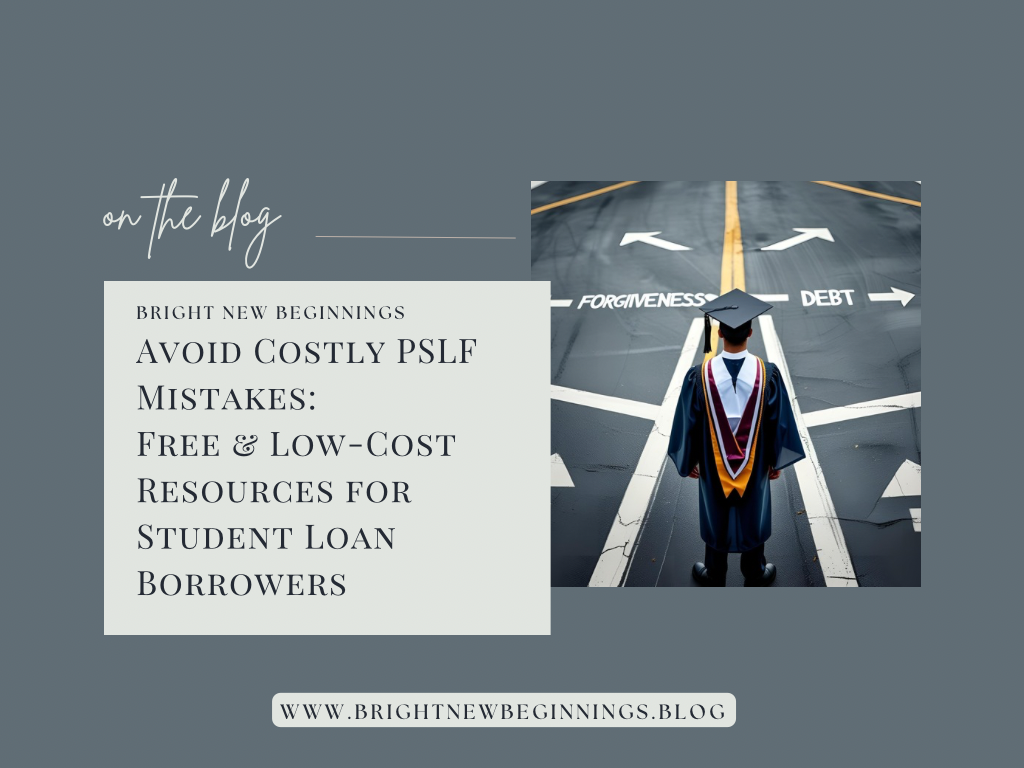
Public Service Loan Forgiveness (PSLF) can feel like a lifeline for those of us in public service careers — yet in practice, it often feels increasingly out of reach.
Rules change, guidance shifts, and what seems like the “right move” can have hidden pitfalls. With so many changes under the current federal administration and lawsuits filed by Republican attorneys general, it’s hard to keep track of developments, when and how changes will be implemented, and how to responsibly plan for the future. It often feels like the rules are constantly in flux. And it’s frustrating.
I’ve been working toward PSLF for years, and I’m currently on the SAVE repayment plan. Like many borrowers, I’m navigating conflicting or sometimes misleading information from the US Department of Education and my student loan servicer, MOHELA. I’m facing questions about consolidating my loans, switching plans, and how to manage my loans with forgiveness in mind. Recently, I found two resources that have been helpful for me in my attempts to figure out my next steps on student loans—and I want to share them in case they help you, too.
It Feels Like There Hidden Risks In Every Decision Related to Student Loans
Since I’m currently on the now-defunct SAVE repayment plan, I am assessing whether to switch repayment plans and estimating what my monthly payments may be. So, I turned to the Federal Student Aid Loan Simulator. Under the Income Based Repayment (IBR) plan, the Loan Simulator provided me with two monthly payment options, indicating that consolidating my loans could result in a significantly lower monthly payment. At first glance, consolidating my student loans seemed harmless—maybe even helpful. After all, it would be reasonable to pursue a lower monthly payment.
Given the mixed guidance flowing from the US Department of Education and MOHELA, I decided to seek out resources to help me make an informed choice before submitting an application for consolidation or to switch repayment plans. I know no one has a crystal ball — my path to forgiveness under PSLF could shift at any moment due to policy changes.
I’m glad I researched resources, listed below. One resource is free, while the other had a modest fee of $20. In doing so, I learned something critical: consolidating your loans can erase all progress you’ve made toward forgiveness.
This isn’t just for PSLF—it can also impact forgiveness under income-driven repayment plans like IBR.
StudentAid.gov actually cautions borrowers about this risk (but does not highlight this on the page where it recommended consolidation for a lower payment on IBR!):
“When you consolidate, you’ll lose credit for any payments made toward income-driven repayment or Public Service Loan Forgiveness (PSLF) on the loans that you consolidate.”
You can read more here: 5 Things to Know Before Consolidating Federal Student Loans.
For me, this was a wake-up call. I’m glad I sought guidance before making a move that could have set me back YEARS in paying down my six-figure student loan debt.
Free One-on-One Help: The California Student Loan Empowerment Network
Realizing that a single misstep in managing my student loans could cost tens of thousands of dollars over time, I started searching for trusted consumer protection help. Fortunately, California offers a free program that has already been helpful: the California Student Loan Empowerment Network (CSLEN). The program is funded by the state and coordinated by the California Department of Financial Protection and Innovation (DFPI). (In fact, the network’s counselor is the one who cautioned me that consolidating loans can mean losing progress towards forgiveness!)
Here’s some background on the Student Loan Empowerment Network from their website, summarized here convenience:
What It Is:
The Student Loan Empowerment Network is a statewide coalition of nonprofit legal aid organizations and community-based groups that specialize in student loan counseling, legal aid, and borrower advocacy. It’s designed to give Californians access to clear, unbiased guidance on federal and private student loans.
Who’s Involved:
Member organizations include legal aid providers and financial counseling nonprofits across the state. The organizations are listed on the network’s website at https://studentloanhelp.dfpi.ca.gov/about/.
How They Help:
- One-on-one counseling about repayment plans, forgiveness programs (like PSLF), and loan consolidation.
- Legal referrals if your situation involves disputes, servicing errors, or other legal complications.
- Workshops and clinics that explain repayment options and new federal programs like SAVE.
- Help navigating complaints to loan servicers, the federal government, or the California Student Loan Ombudsman.
Who It’s For:
Any California resident with student loan debt—whether federal or private—can use this resource. There’s no income requirement, and services are free.
How to Access:
Visit studentloanhelp.dfpi.ca.gov to connect with a participating organization and schedule a counseling session. You can learn more or connect with the network here: https://studentloanhelp.dfpi.ca.gov/about/.
I also recommend checking out DFPI’s webinars on student loans — they’re accessible and informative. You can find past recordings on their YouTube channel: https://youtube.com/@cadfpi
Another Practical Resource: The Student Loan Plan Playbook
I recently purchased Stanley Tate’s Playbook: How to Decide What to Do with Your Student Loans Now that SAVE Interest is Restarting, and it’s one of the most helpful resources I’ve found.
The playbook simplifies the maze of information around PSLF, SAVE, and repayment options into something digestible and actionable. It gave me clarity on possible next steps and helped me think more strategically about my own financial goals.
For me, the playbook clarified that switching from SAVE to IBR might be the right move to help me stay on track with forgiveness. It also pushed me to seriously consider PSLF buyback, something I hadn’t factored into my plans before — though, like many, I’m uncertain how long the buyback option will remain available. After working through the scenarios, I realized I may be closer to forgiveness than I thought, assuming my employer continues to qualify and my payment count holds up under review.
Why Share This?
I’m sharing my journey for two reasons:
- For current borrowers: If you’re on SAVE or pursuing PSLF, know that resources exist—free counseling, (accessibly priced) practical playbooks, and official federal guidance—that can help you avoid costly mistakes.
- For future law students: If you’re planning to finance law school with federal loans in hopes of pursing public service and also forgiveness under PSLF, please understand that PSLF is not guaranteed. Program rules and waivers change frequently, and a single misstep can erase years of progress. Explore scholarships, part-time work, and fellowships before taking on six-figure debt.
Final Thought
PSLF can still be life-changing — but it requires vigilance, patience, and strategy. Before consolidating or changing plans, seek expert advice. Use the free resources available, and consider paying for sound expertise if it will help you safeguard your progress toward eliminating your student loan debt. And know you’re not alone — many of us are navigating this maze together.
Good luck as you navigate student loan repayment!
If you have any helpful resources to share, please pass them along.
In Law School or Thinking About Law School and Want More Resources?
If you’re exploring law school, in law school & planning your legal career, or navigating financial decisions along the way, I’ve created practical guides and workbooks to help you every step of the journey. From scholarships to career planning to financial wellness, you’ll find tools designed for first-generation students and future public interest lawyers.
Browse all of my workbooks and guides in my blog’s Shop.




Leave a Reply